

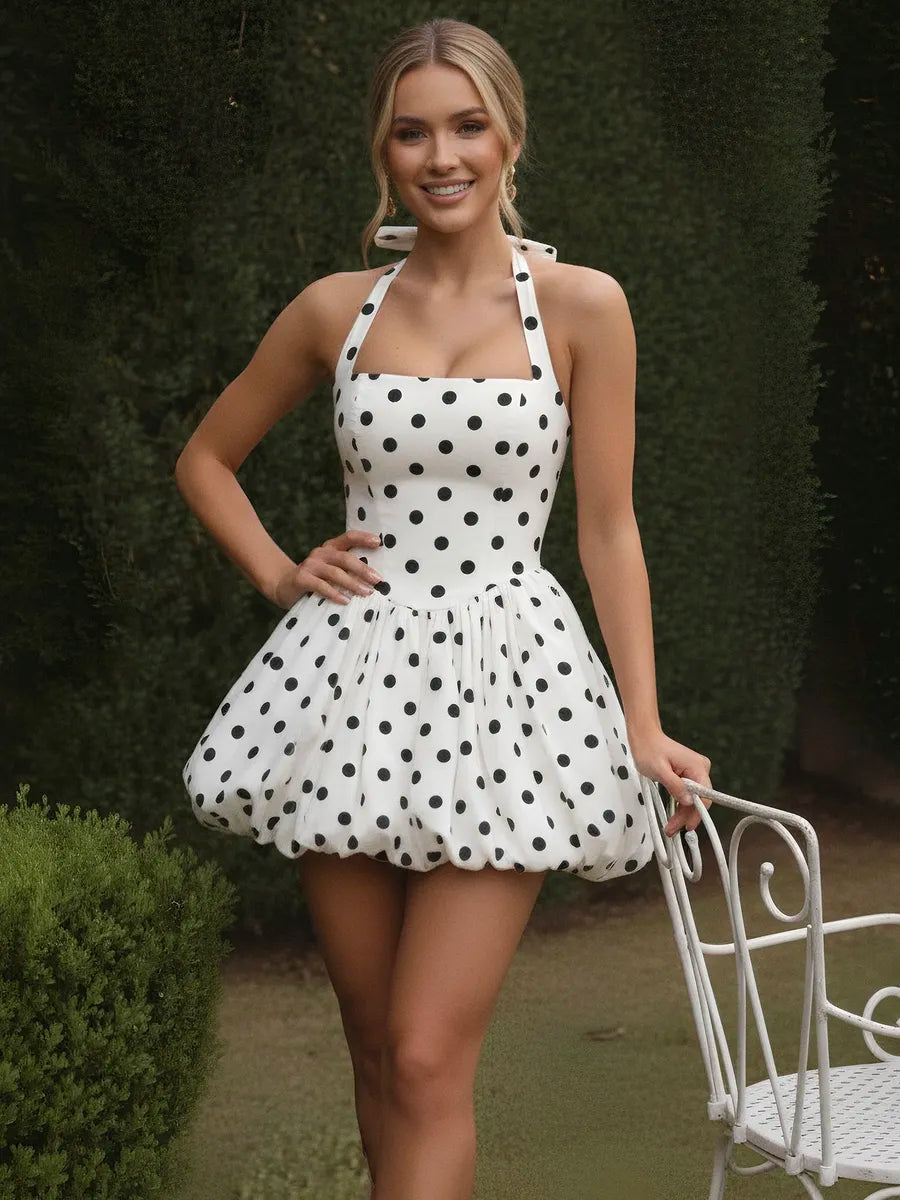




What is polyester fabric? Things you need to know about polyester fabric.
Polyester fabric is a popular fabric on the market and is widely used in many fields, making it very popular. So, what exactly is polyester fabric? Why is polyester preferred over linen, cotton, and other fabrics? Read this article to learn more about this polyester material!
What is polyester?
Polyester fabric is a synthetic fabric made from ethylene derived from coal, petroleum, and air. Polyester is essentially a type of plastic, and polyester fibers are created through a chemical polymerization process, resulting in four basic types of fibers: raw fiber, staple fiber, fiberfill, and filament.
This fabric is used in many fields and for various products such as sportswear, bedding, underwear, etc. Almost all products we use daily are made from polyester, demonstrating its significant impact on our daily lives.
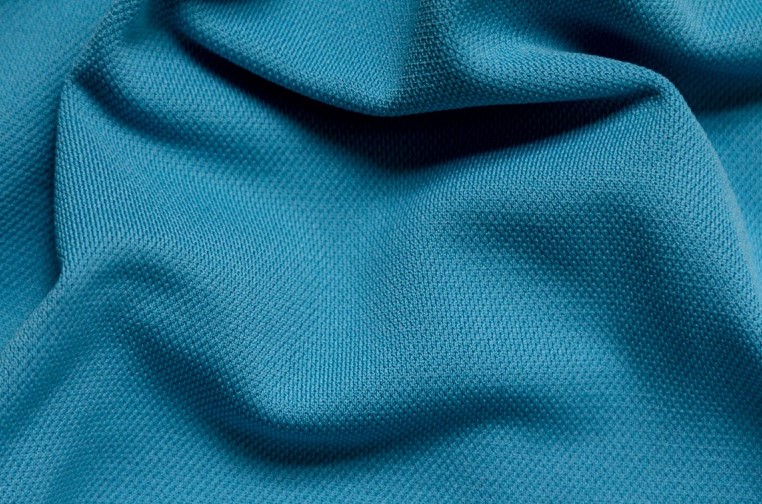
This type of fabric has permanent creases and decorative shapes and patterns, making it stain-resistant and easy to clean. Clothing made of 100% polyester tends to accumulate static electricity; to eliminate this problem, polyester is blended with stable fibers like cotton during processing, resulting in polycotton. With its advantages of breathability, durability, and antibacterial properties, it is commonly used in clothing manufacturing.
Origin of polyester fiber
Polyester was discovered in the laboratory in the 1930s. Between 1939 and 1941, many British scientists studied and paid attention to this material, leading to the creation of polyester.
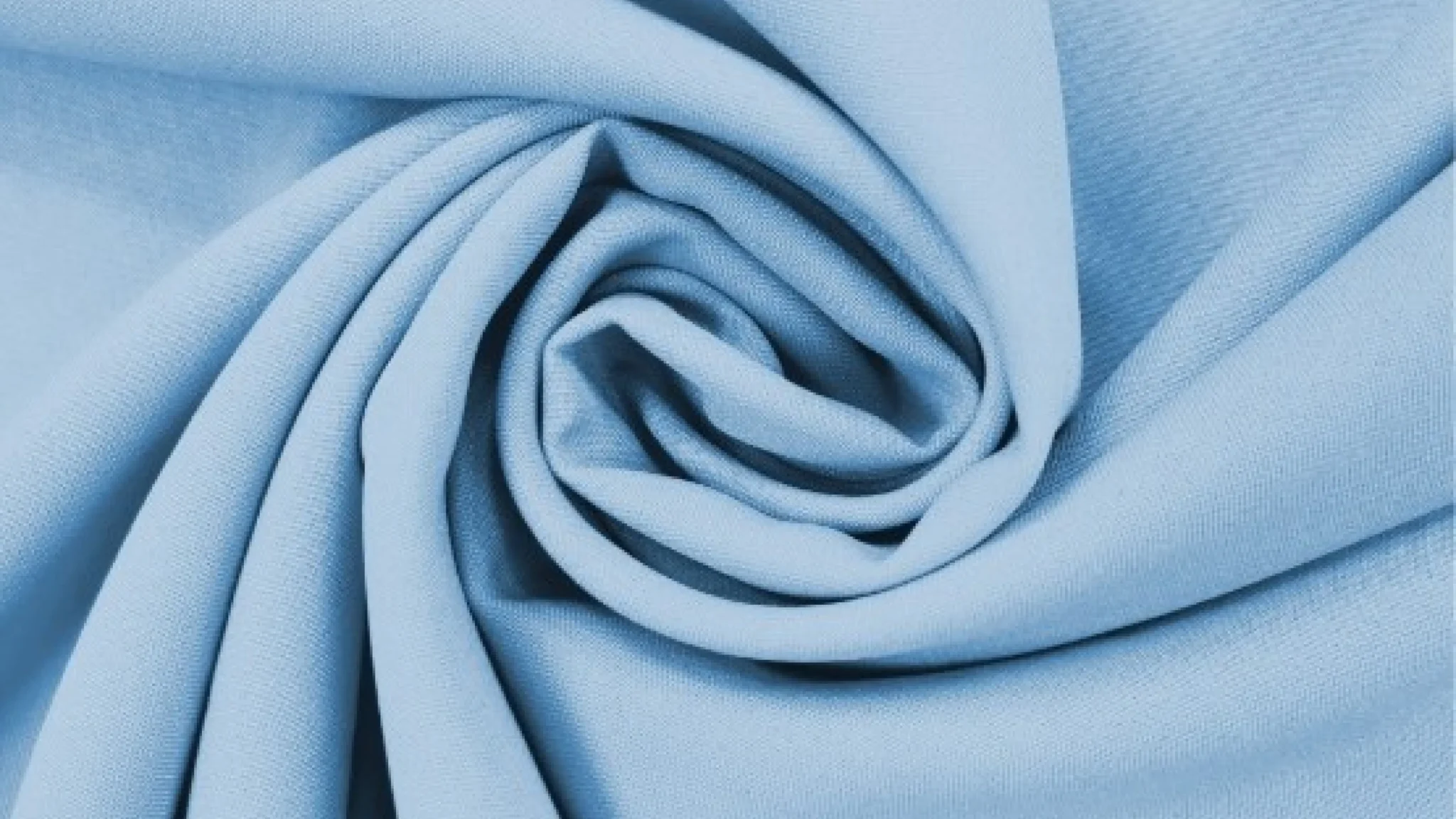
In 1946, DuPont, who discovered polyester, began acquiring the rights to produce this special fabric for the market. Currently, polyester exists in two main forms: 4-cyclohexylene-dimethylene terephthalate (PCDT), Polyethylene Terephthalate (PET), and poly-1. Of these two main types, PET is more popular due to its durability and high applicability. Furthermore, PET can be used independently or blended with other materials to enhance its dirt-repellent and wrinkle-resistant properties.
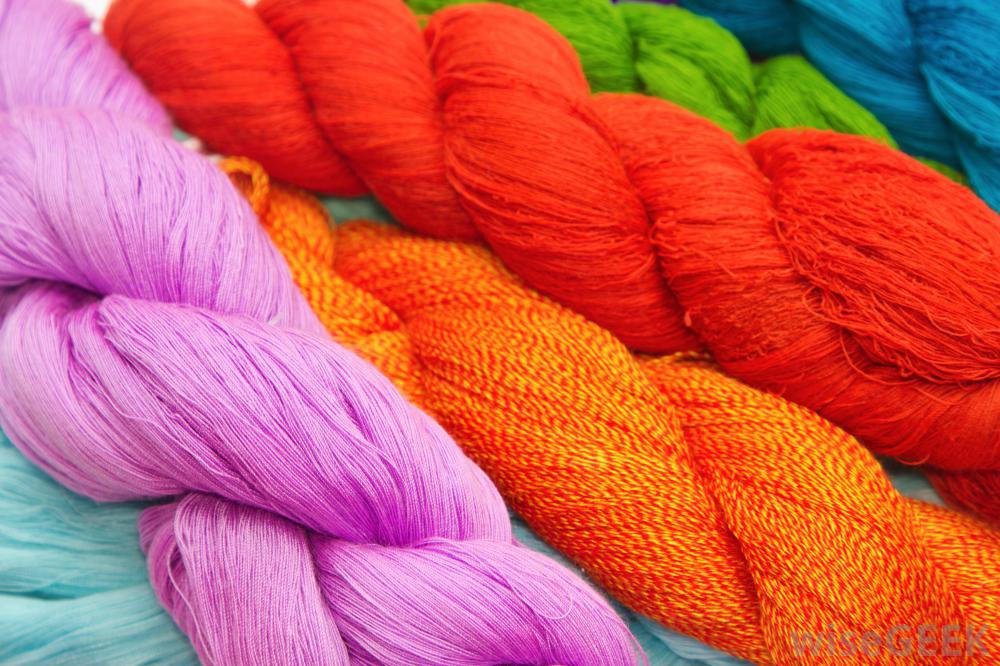
In the 1970s, polyester was at its peak, when disco music became a musical phenomenon in many countries around the world, featuring famous bands like Modern Talking and Gloria Gaynor. In these music videos, you can admire the sleek and sparkling suits made from polyester fabric.
Polyester Fabric Manufacturing Process
There are many different methods for producing polyester, depending on the desired fiber material. These include raw fibers, staple fibers, filament fibers, and fiberfill fibers. The polyester fiber manufacturing process is as follows:

Polymerization Reaction
The process of creating polyester involves mixing dimethyl terephthalate with ethylene glycol as a catalyst and heating it to temperatures between 50 and 210 degrees Celsius to create a compound called a monomer.
The monomer is then reacted with terephthalic acid and heated to 280 degrees Celsius. At this point, the polyester begins to form and is passed through a slit to create polyester strips.
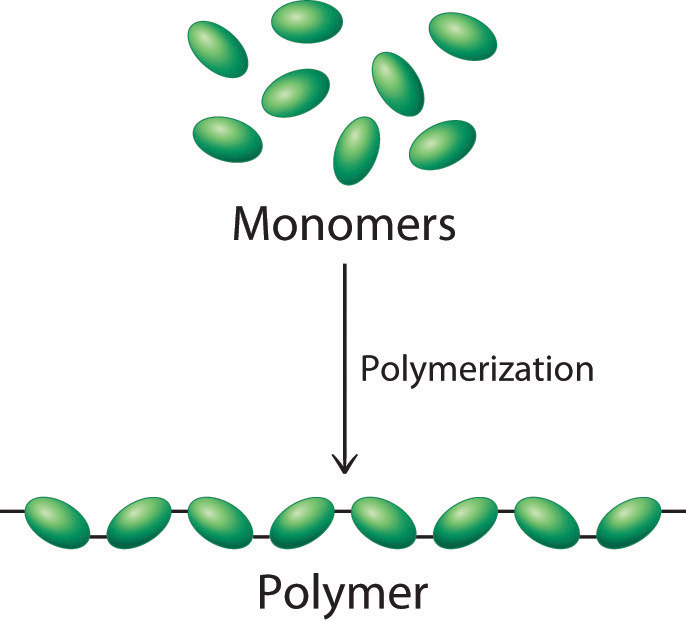
Drying
The polyester strips obtained after the polymerization reaction are dried and cooled until the material gradually becomes brittle. They are then cut into small pieces and dried again to produce the best quality polyester fiber.
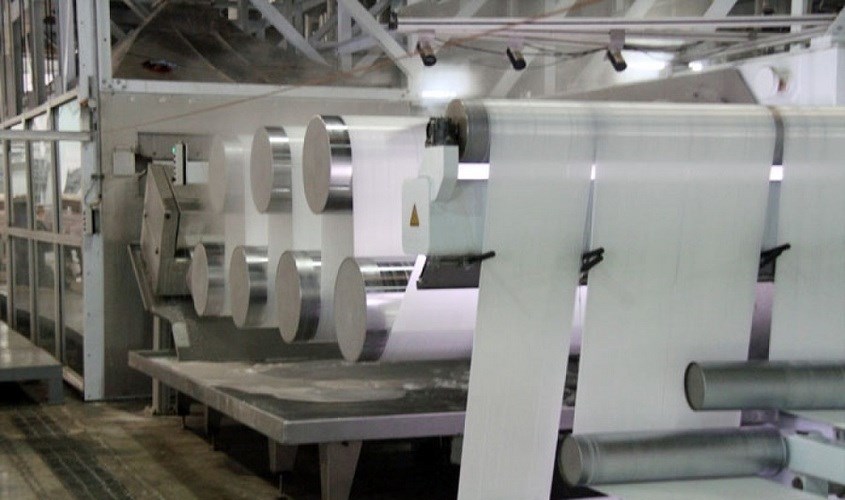
Drying makes it easier to store and increases its durability.
Yarn extrusion
Polyester fibers are melted at temperatures of 260 to 270 degrees Celsius to form a thick, syrup-like solution. This polyester solution is placed in a spool and then extruded through numerous small holes of various shapes, most commonly circular.
The fiber size is determined by the density of the holes in the spool. Individual fibers are formed when the small fibers are extruded from the spool and twisted together. During the extrusion process, various chemical compounds can be added to overcome the shortcomings of raw polyester fibers, such as antibacterial or flame-retardant properties.
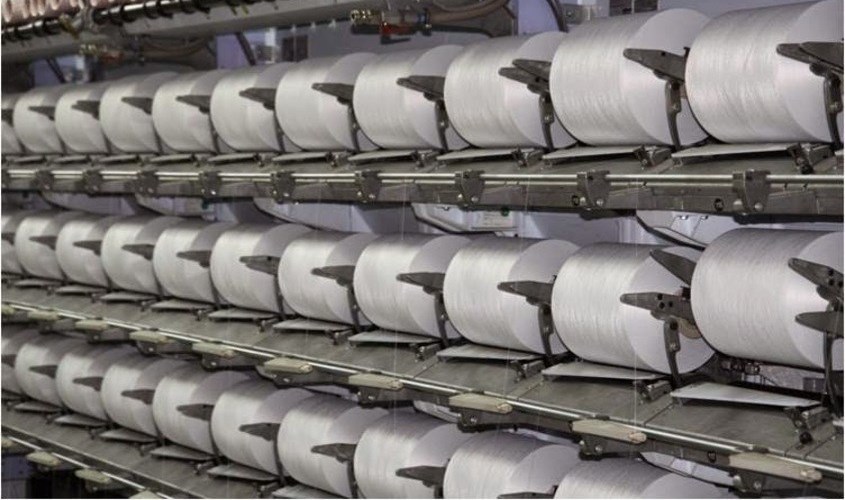
Coincidentally, it is suitable for polyester production.
Spinning
When first formed, polyester fibers are very soft. Polyester can be stretched to several hundred times its original length. The more the fiber is stretched, the thicker it becomes, and the smaller its diameter. The stiffness or softness of polyester fiber depends on this stretching process.
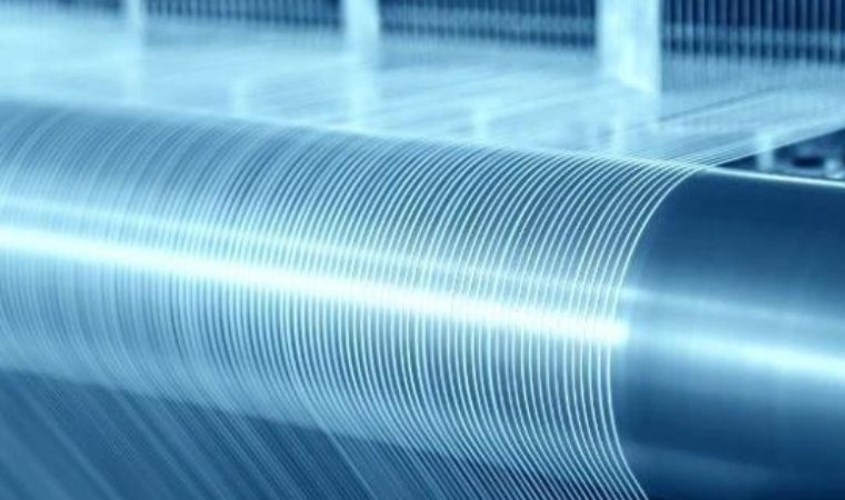
The spinning process for producing polyester.
Thread winding
Polyester yarn is wound onto a large spool, ready for the weaving process.
The finished polyester yarn is then woven into fabric sheets; in addition, in many places, it is wound into large rolls for distribution to the market.
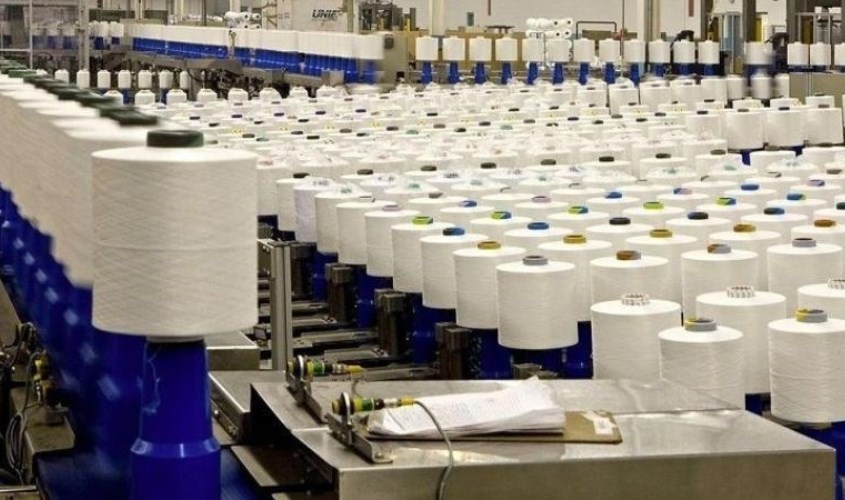
Polyester yarn winding process
Advantages and disadvantages of polyester fabric
Advantages of polyester fabric
Good durability
Polyester has excellent elasticity and shrinkage resistance. During the spinning process, polyester fibers are twisted together to form a strong, unbreakable structure. While some fabrics like cotton, chiffon, and jersey tend to sag and lose their shape after a period of use, polyester retains its original form throughout its lifespan. Polyester is also highly resistant to abrasion and wrinkles.
Good water resistance
Good waterproof products are made from polyester, such as jackets, tents, sleeping bags, etc. Polyester has the characteristics of low moisture absorption, does not fade over time, and is easy to process and paint.
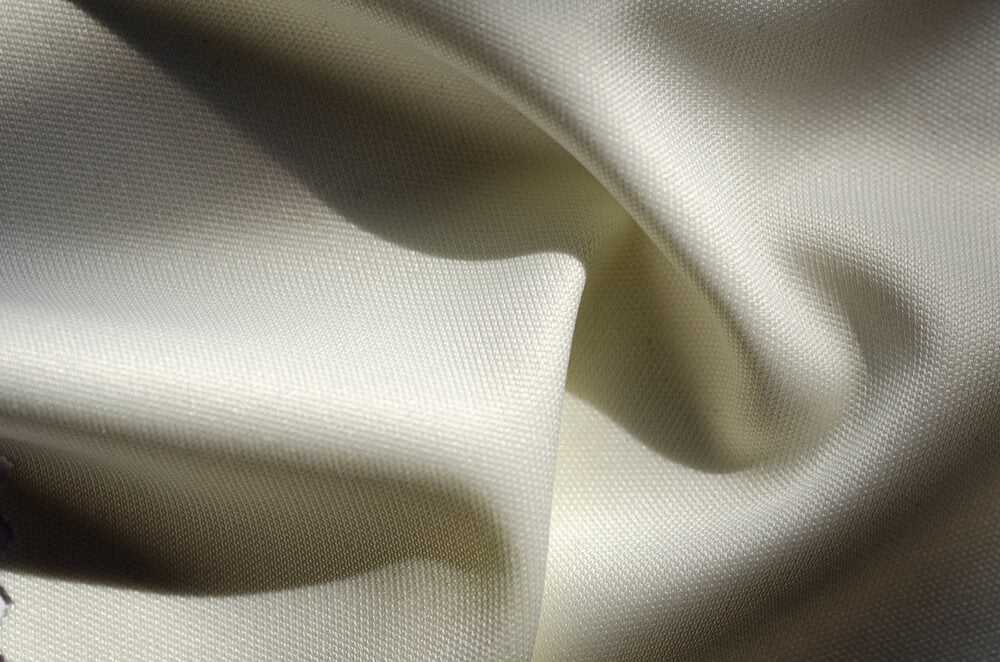
Outstanding and impressive dyeing capabilities.
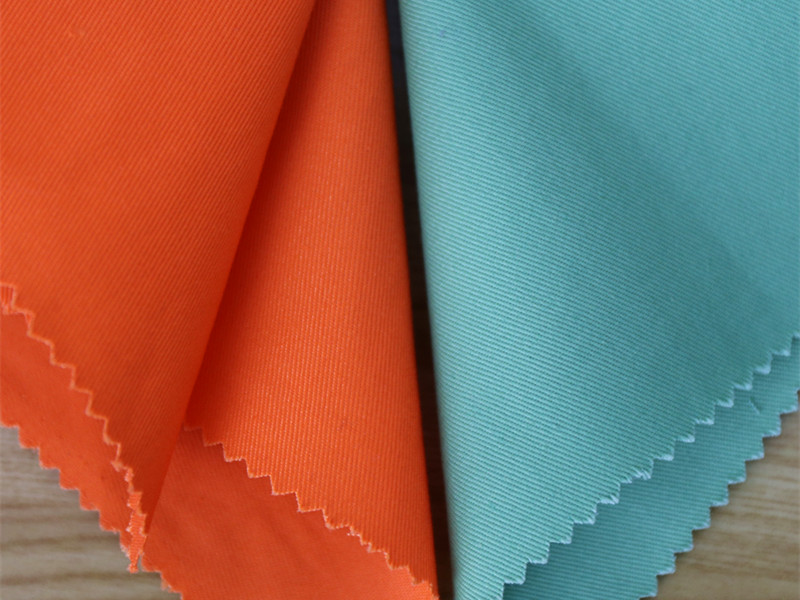
Polyester is widely produced for the fashion and garment industry, so the dyeing process is crucial as it determines the aesthetic appeal of the product. Polyester fabric allows manufacturers to easily dye it in a variety of colors. The dyeing process results in beautifully colored finished products that retain their color extremely well, preventing fading or bleeding into clothes during washing.
Easy to wash and iron
Polyester is very durable and resistant to many chemicals, so washing and drying it is not difficult. You can also wash and dry this fabric at home without worrying about high temperatures damaging the fabric or harsh washing cycles exceeding its strength.
Another advantage is that polyester dries very quickly, making it a "powerful helper" for housewives.
Low Cost
Polyester is produced from low-cost materials and the manufacturing process is not complicated, resulting in a low price suitable for the consumer segment.
Other Advantages
Polyester fabric is resistant to mold and bacteria. Clothing made from this fabric has a smooth surface, making it very comfortable against the skin, and the fabric surface is also resistant to dirt.
Disadvantages of polyester fabric
Causes uncomfortable heat and stuffiness
Due to its relatively high thickness and poor absorbency, polyester fabric is very hot and unsuitable for summer wear. Therefore, it is often combined with other materials such as cotton and modal to make products made from polyester more comfortable.
Causes environmental pollution
Because it is a synthetic chemical fabric, polyester has a very low biodegradability. Furthermore, the production process releases many harmful gases and toxins, significantly impacting the environment.
Applications of polyester fabric
Polyester fabric is widely used in daily life for items such as raincoats, tents, and waterproof fabrics. Polyester knit fabric is widely used for clothing, upholstery, bedding, etc.
Polyester can be used as an insulation layer in mattresses, pillows, and comforters by producing hollow fibers. Polyester fibers are often blended with natural fibers such as cotton and modal to increase the material's durability, reduce wrinkling, improve care, and allow for more vibrant dyeing.

Sportswear made from polyester is a great choice. The most perfect material is a cotton-polyester blend. While polyester is a durable fabric, its absorbency is limited; it only wicks away oil from the body, not water, which can make you smell worse during exercise. Polyester combined with cotton creates an excellent material. Sportswear made from this cotton-polyester blend provides comfort and ease of movement.
Cotton's advantages of good absorbency and softness, combined with polyester's good elasticity, ensure maximum comfort.
Cleaning and Care
Cleaning and caring for polyester fabric is extremely simple and easy. It doesn't stain easily, dries quickly, and doesn't shrink or lose its shape after washing. In addition, because it wrinkles less, you don't need to iron it often; if you do need to, just iron the clothes at a low temperature to ensure the fabric's durability.
Conclude
Above are Celidior's insights on polyester material. We hope this article provides useful information to help you choose the best products for yourself.


Ecrit par Celi Dior
Laisser un commentaire
Ce site est protégé par hCaptcha, et la Politique de confidentialité et les Conditions de service de hCaptcha s’appliquent.